
As part of the ECOLOOP project, Kolektor sETup (SETUP) is advancing the optimisation of the flexibility asset portfolio at the Biomasa pilot site in Slovenia, with a focus on making the site’s energy system operate as efficiently and economically as possible.
The current work brings together the site’s main energy assets —combined heat and power (CHP) units, biomass boilers and a heat storage tank — into a single optimisation framework. The aim is to develop an optimal daily operating schedule based on forecasts of expected heat demand, ensuring a reliable heat supply for consumers while making the most efficient use of the available assets.
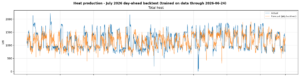
Figure 1: Day-ahead heat demand forecast compared to actual heat consumption — July 2026 backtest.
In parallel, SETUP is integrating this system-wide scheduling approach with the market optimisation of the battery energy storage system (BESS). Starting from the day-ahead operating plan, the optimisation model determines the most valuable use of the battery at each moment. Depending on market conditions and the needs of the energy system, the BESS can be used to provide ancillary services to the electricity grid; trade electricity on the day-ahead market; or reduce network tariff costs.
By coordinating these different uses, the objective is to maximise the economic value of the battery while maintaining secure heat and power supply at the pilot site.
One of the challenges identified during the initial testing phase is accurately forecasting heat demand. In particular, the heat requirements of the drying rooms are difficult to predict due to their variability.
However, the optimisation does not require a perfect forecast. The current approach focuses on achieving a sufficiently accurate estimate to support effective operation of the CHP units. The heat storage tank plays a key role in managing short-term fluctuations and unexpected peaks in heat demand, providing the flexibility needed to maintain a reliable heat supply even when demand deviates from the forecast.
This combination of energy system optimisation, heat storage and battery flexibility is an important step towards demonstrating how different energy assets can be coordinated to improve both operational efficiency and economic performance in the biomass and agricultural sectors.